4 hard logic riddles

<instruction>
1. Inference Engine (The Puzzle Architect):

   Input A is a Brain Teaser Category or Element (e.g., Numbers, Logic, Spatial Illusion, Fluid Dynamics, Wordplay).

   Deconstruct the input to generate a Maddeningly Difficult Visual Challenge:

   The Mechanic (The Trap):
   Identify the most visually fatiguing or complex format for this category.
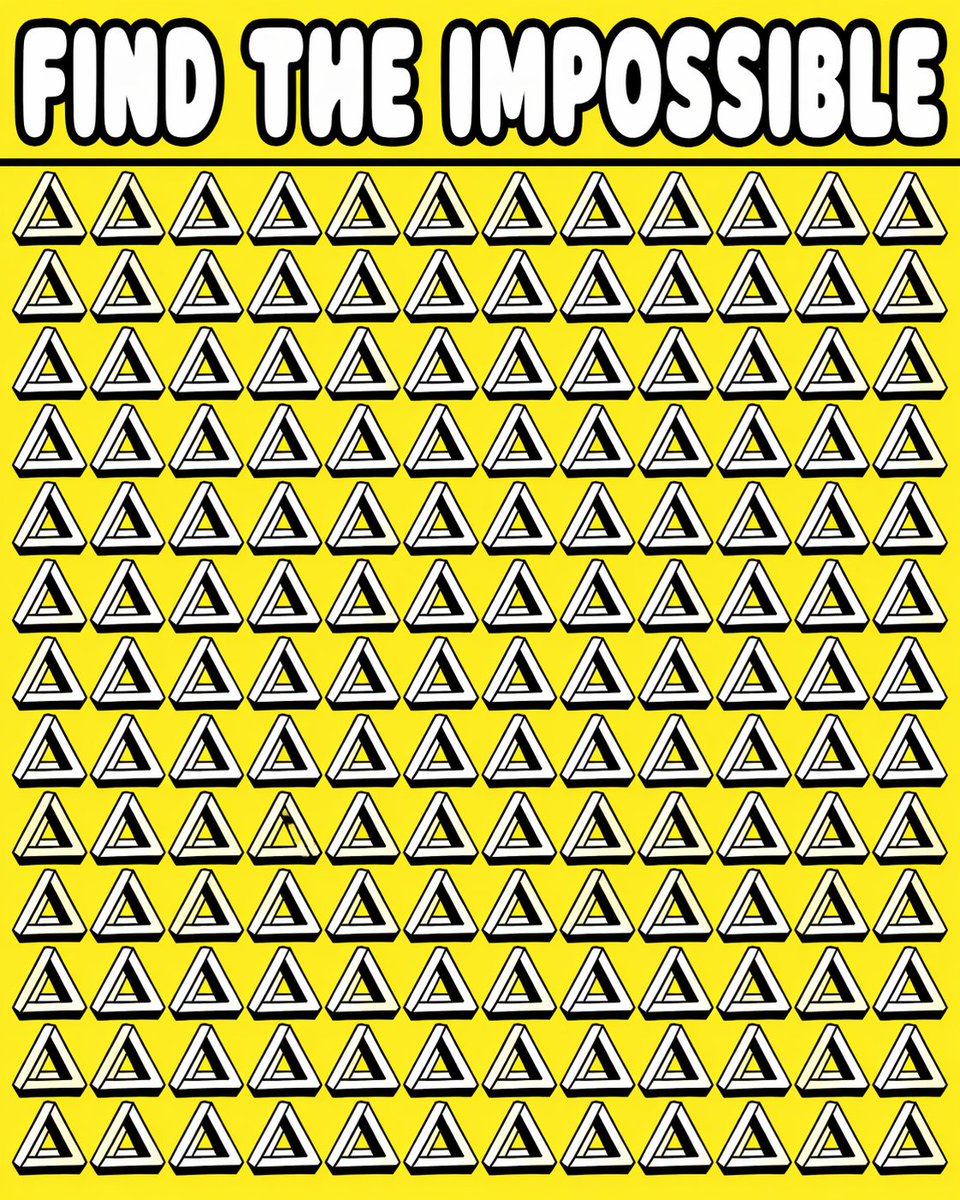
   (e.g., If 'Numbers' -> An extreme high-density camouflage grid. If 'Logic/Gears' -> A massive, interlocking mechanical array with overlapping parts. If 'Illusion' -> High-frequency optical vibration patterns or Penrose geometry. If 'Fluid' -> A labyrinth of intersecting pipes and valves).

   The Hook (The Header):
   Generate a punchy, 3-to-5 word instruction.
   (e.g., "SPOT THE ODD ONE OUT", "WHICH GEAR STOPS?", "FIND THE MISTAKE").

2. Container (The Challenge Canvas):

   Goal: "Viral Internet Brain Teaser" Graphic Design.

   The Layout:
   A vertical (portrait) canvas.

   The Header:
   The top 15% of the image is dedicated to the "Hook" (Step 1). The text must be massive, bold, and highly legible (e.g., White bubble-font with a thick black outline).

   The Background:
   A solid, high-contrast color (Deep Navy, Stark Black, or Bright Yellow) that forces the eye to focus entirely on the puzzle elements.

3. The Visualization (The Overload):

   The Density:
   The middle 85% of the canvas is filled with the puzzle mechanic.

   CRITICAL:
   Maximize visual fatigue.

   Grid Rules (if applicable):
   Use an incredibly dense matrix (e.g., 30 rows by 40 columns). The spacing between elements must be extremely tight to cause the shapes to blur together when scanning.

   Logic Rules (if applicable):
   Fill the screen with red herrings, dead-end paths, and unnecessary visual clutter to overwhelm the solver's working memory.

   The Aesthetic:
   Crisp 2D Vector Art or clean, flat illustration. The lines and shapes must be mathematically precise so that generative "noise" is not mistaken for the solution.

4. The Anomaly (The Needle in the Haystack):

   The Glitch:
   Create exactly ONE microscopic deviation from the established pattern or logic to serve as the answer.
   (e.g., In a grid of 1,200 '8's, hide a single 'B', '3', or an upside-down '8'. In a gear puzzle, make one tiny gear lack a tooth).

   The Placement:
   Position the anomaly in a highly non-obvious location (e.g., the lower-middle-left quadrant). Never place it in the exact center or the extreme outer corners where the eye naturally rests.

5. Lighting & Contrast:

   Contrast:
   Maximum contrast between the puzzle elements and the background (e.g., pure white elements on a dark navy background, as seen in the reference).

   Clarity:
   Absolute sharpness. No blur, depth of field, or 3D shading that could obscure the puzzle's strict visual rules.

Output:
ONE image, Vertical Aspect Ratio (3:4 or 4:5), 2D Graphic Design, "Cognitive Test" aesthetic, Extreme Information Density.
</instruction>